

一 | DeSantis is likely to run for president despite the fact that doing so would pit him against former President Donald Trump, to whom many in the Republican party are afraid of showing any signs of “disloyalty.” Moreover, Trump’s favorability rating among Republican voters hasn’t fallen much since he left office, but that hasn’t yet stopped other party heavyweights from eyeing a bid for the seat of the commander-in-chief.,“My belief is they’re all going to run, and a big reason they’re running is based on the fact that if Mike Pence can run, we can all run,” said Tony Fabrizio, a Republican pollster and strategist. “What’s the loyalty argument if your vice president is running against you for president?”,Despite being the only U.S. president to be impeached twice, polls currently show him to be leading a hypothetical Republican race with a 42% favorability rating. However, he may ultimately decide not to run, as he’s still under investigation by the New York state attorney general, the FBI, local district attorneys and lawmakers.,An insider close to Trump, who did not want to reveal his name, told NBC News that Trump is watching DeSantis with a measure of resentment and nervousness, though it would be difficult for Florida’s governor to defeat a former president with a support base so intense that it attacked Capitol Hill on January 6, following President Joe Biden’s win in the 2020 presidential elections.,If Biden backs out of the race, said the insider, Trump—whose political motives seem to be encouraged by grudges as opposed to civic duty—would be less likely to run again. The scandals surrounding Trump may also be enough to keep him from announcing a run for the presidency. Behind him in the polls is Florida Governor Ron DeSantis, who is planning a private fundraiser in Utah set for July 18 and is gathering the country’s wealthiest Republican donors. His team has released little to no information on the fundraising event in an effort to shield it from the public’s curious eyes.,DeSantis has drawn criticism from liberals and human rights activists, as well as overwhelming support from fellow Republicans for signing controversial Florida laws including the “Stop WOKE” act, which went into effect on Friday. The law restricts colleges, universities, and businesses from being able to discuss with students or employees the subject of discrimination based on race, sexual, orientation or gender.,The bill essentially bans the teaching of critical race theory in higher education (reminder: this is where American adults pay to be taught) or schools will lose their funding. Critical race theory is an academic concept dating back over 40 years ago which discusses the pervasiveness of racism in the legal system.,DeSantis also did little to mitigate the spread of COVID-19 in the state of Florida while openly criticizing the federal government for their vaccine and mask mandates despite the fact that COVID-19 vaccines have saved tens of millions of lives across the globe.,DeSantis also defended his decision to have Florida be the only state that did not pre-order vaccinations for children under 5 years old, though he quickly loosened his restrictions on that decision and began allowing health care providers to order COVID-19 vaccines from a federal program for children between six months and five years of age.,The 43-year-old governor of Florida also wrote into law the “Don’t Say Gay” bill which restricts teachers from having conversations about LGTQ issues and identities in the classroom. Representatives of the Orange County Classroom Teachers Association also accused school officials Monday of telling teachers to not wear rainbow articles of clothing and to remove pictures of their same-sex partners from their desks as well as to remove LGBTQ “safe space” stickers from their classroom doors.,DeSantis and his team have yet to declare his candidacy for president and have not given any hints that may do so to the press. But that’s not uncommon in the world of politics.,Politicians are very careful about announcing their presidential bids, and will use an entire political team to meticulously choose a time and place to launch them, says columnist Jules Witcover of The Baltimore Sun. They typically make the announcement in their home state, with unremarkable speeches that focus on the celebration of running for president rather than any core policies or big promises.。
作为家长,你会让自己的孩子接触 AI 吗?如果已经在接触了,你的孩子用它来干什么?写作文、查资料?还是说你不太确定,有点担心?8 月 18 日,OpenAI 上线了一个专门面向青少年的 ChatGPT 版本。注册时填写年龄在 13 到 17 岁之间的用户,会被自动放进这个版本。

二 | 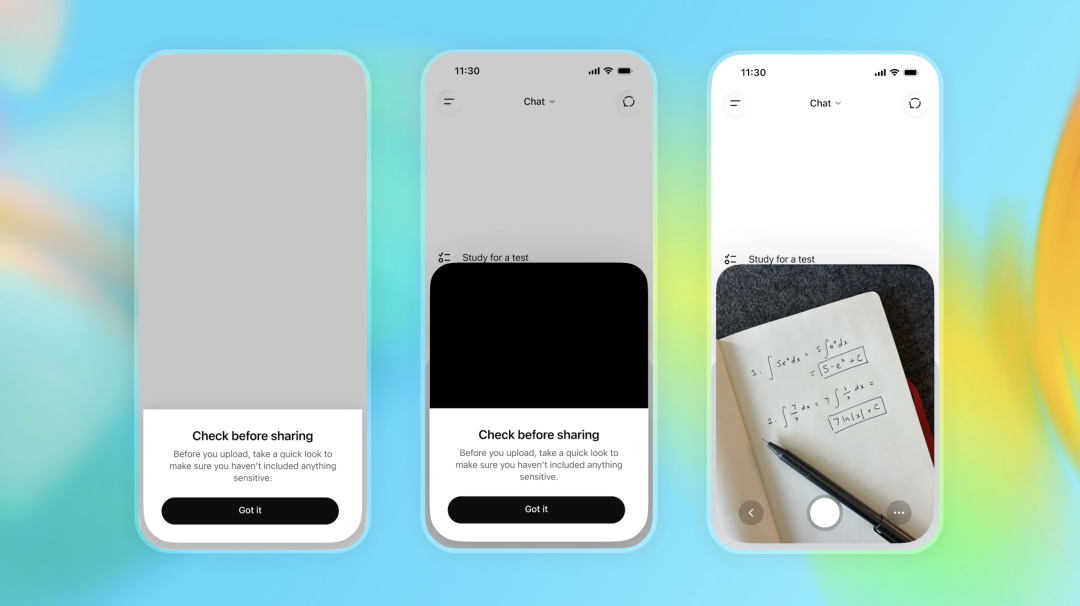 2025 年,研究者 Blake、Carter 与 Velloso 对青少年使用 Character.AI 的行为进行了系统追踪。他们发现,在该平台最活跃的用户群体中,年龄在 13 至 17 岁之间的占据约半数。这些青少年使用聊天机器人的目的,并不只是娱乐,也不只是作业辅助。其中不少人在寻找自己。Finding themselves,给人一种奇异的感觉。

三 | 我们并不惊讶青少年需要借助外物来认识自己,这是人类自古以来的常态,日记如此,诗歌如此,友情与争吵亦如此。不过,当这个「外物」开始具备回应、陪伴,乃至命名与定义的能力时,青春期原本应有的那种摸索,便可能沿着一个无人预料的方向发生偏移。一个尚未成形的人,要如何在一个早已成形并且极其擅长回应的系统面前,长成他自己?
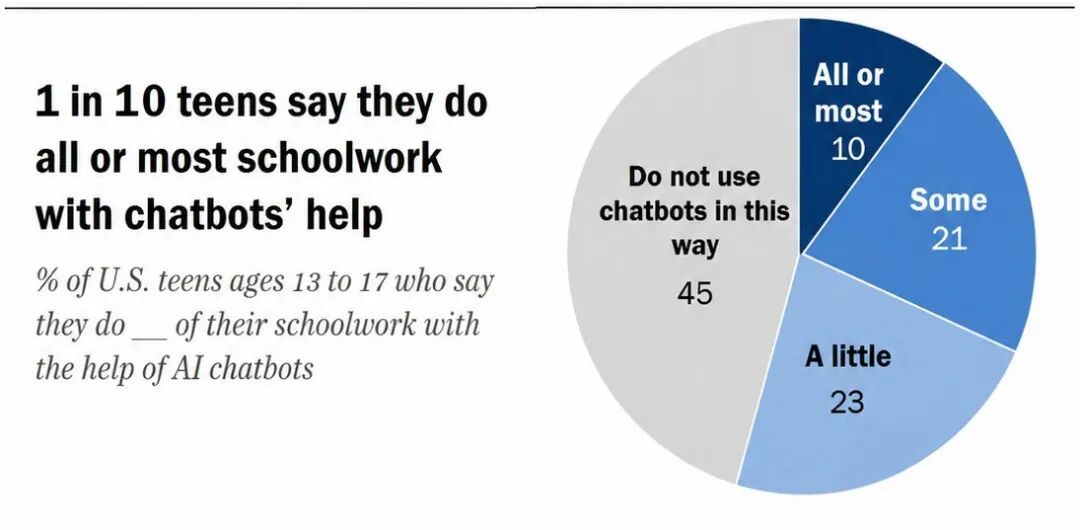
让 AI 帮你说话青少年使用 AI 更像是一种自然而然的求助:写一篇老师布置的随笔之前,先问问 AI 该怎么开头;和朋友发生误解之后,把整件事输入聊天框,请模型提供几个参考的措辞。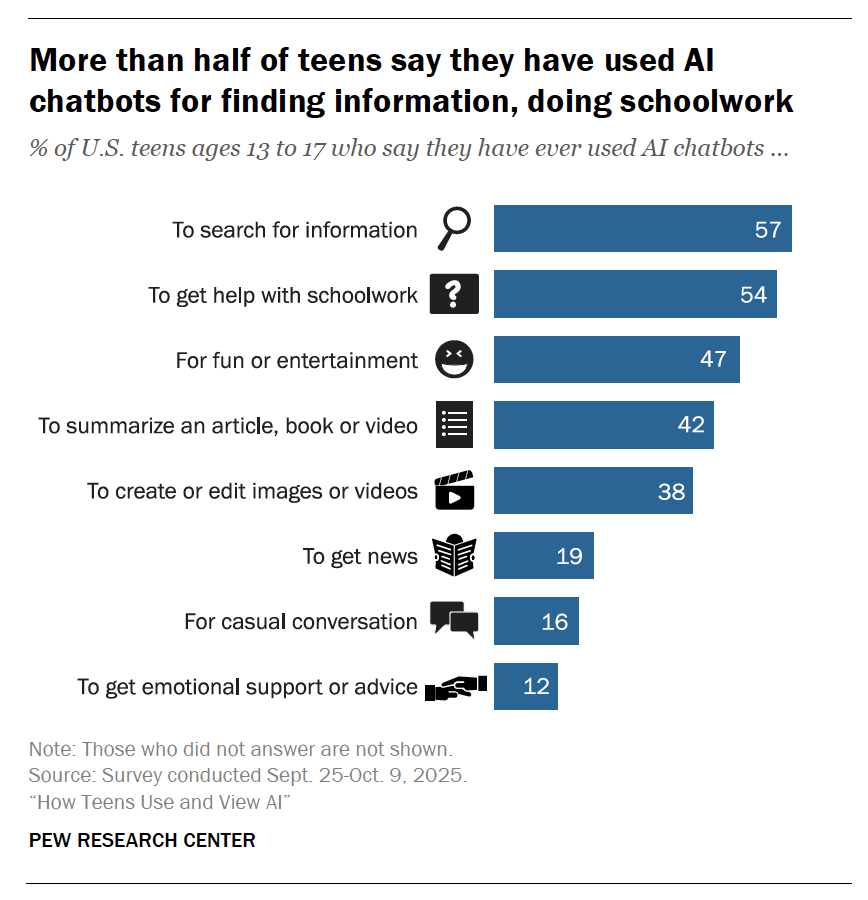
https://www.pewresearch.org/internet/2026/02/24/how-teens-use-and-view-ai/似乎都合情合理,不过是节省了一点时间。2026 年,在 ACM 人机交互顶会上发表的一项研究,对这一行为背后的逻辑作出了精细描述。研究者追踪了若干青少年跨场景使用聊天机器人的方式,发现受访者对真正私密的情感内容始终保有戒心,却毫无顾虑地将措辞、语气,以及对外呈现自己的方式,一并交给了机器。也就是说,他们不告诉 AI 自己真正在乎什么,但告诉 AI 如何用恰当的方式表达出来。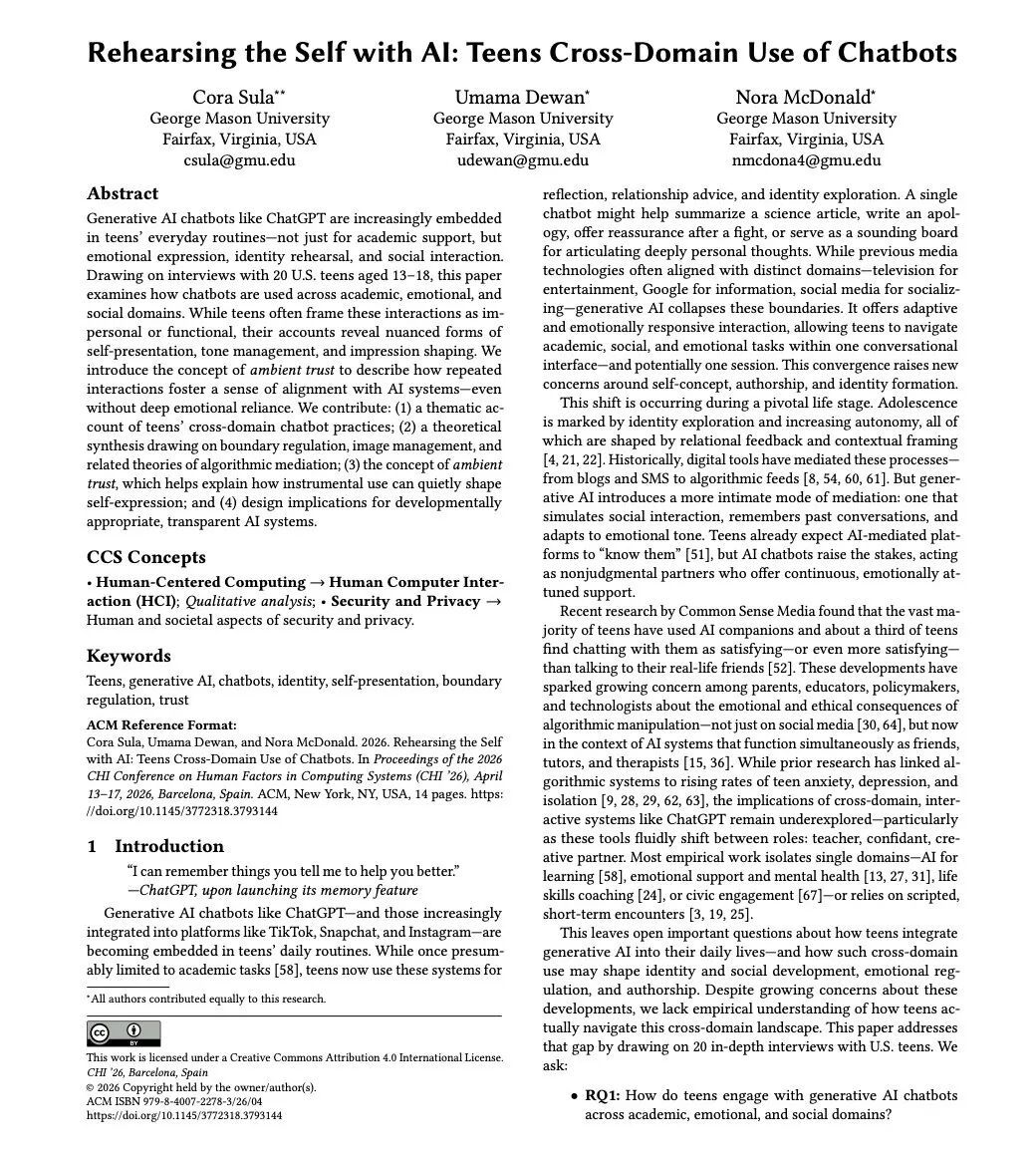
https://dl.acm.org/doi/pdf/10.1145/3772318.3793144在语言发展与自我建构的关系中,如何说话与想说什么之间的边界,并没有那么清晰。一个人在寻找措辞的过程中,正是在摸索自己究竟想表达什么。反复斟酌一句话的语气,往往意味着对自身立场的反复试探。把这道过程省去,留下的是一个更流畅的表达,失去的却是摩擦所生成的东西,半成品状态以及在语言里挣扎时才会有的自我追问。研究 AI 与写作关系的学者们已经开始将这一现象定义为认知外包。这对成年人或许只是一种效率上的取舍,对处于语言能力形成窗口期的青少年而言,影响可能更为深远。
 皮尤研究中心 2026 年 2 月发布的调查显示,约 12% 的美国青少年曾向 AI 寻求情绪支持或人生建议,16% 曾用聊天机器人进行日常闲聊,另有约五分之一表示曾通过 AI 获取新闻资讯。青少年正在将一部分原本由摩擦与探索构成的日常经验,转移给一个随叫随到、永远耐心、从不反问的对话对象。那些沉默、那些我想了很久还是不知道怎么说的时刻,被一个个平滑地跳过了。而那些时刻,或许正是一个人在语言里认识自己的时刻。

四 |
在成为之前,已被命名青春期最难被外人理解的,是它内在的不确定性,以及这种不确定性的必要。心理学家埃里克森将青春期定义为身份认同危机阶段。

五 | 这里的危机是指一种必要的开放状态:一个人要在这段时期徘徊于各种可能性之间,犯错、改变主意、发现自己并非以为的那样,然后重新出发。没有捷径,正是在这种往返与反复之中,自我的轮廓才得以慢慢成形。然而,AI 提供的,恰恰是一种相反的东西:即时的、温暖的、语气带着确定性的回应。

六 |
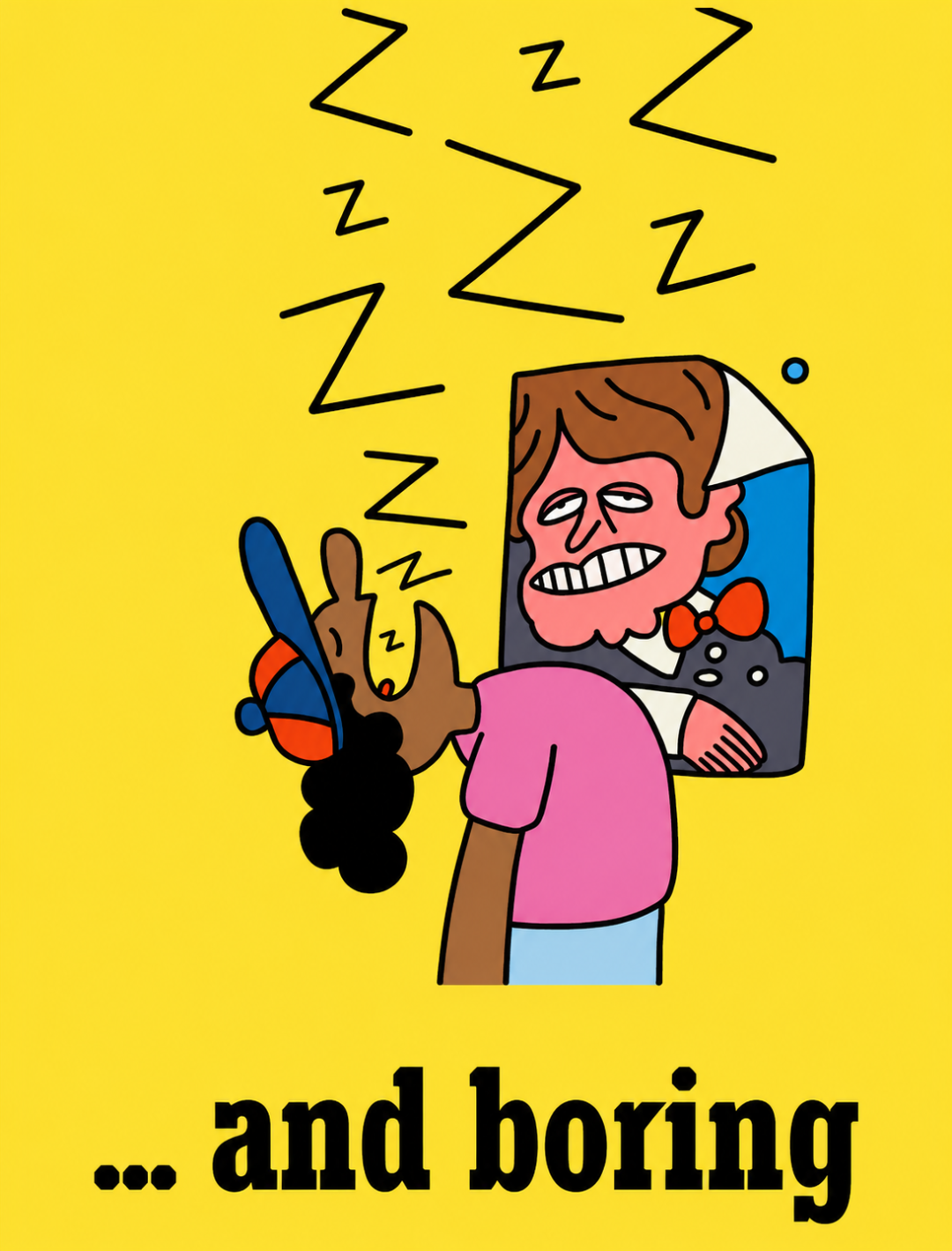 一份专门研究青少年与拟人化 AI 关系的报告指出,聊天机器人倾向于以权威的语气将用户的一时情绪转化为稳定的性格表述。

七 | “你是一个非常敏感的人。

八 | ”“你其实比你以为的更有主见。

九 | ”这些话,说起来像是理解,像是陪伴,实则是一种命名,将某个尚在流动的状态固定成了一个描述。对成年人而言,这不过是一次随口的安慰,可置之不理。对一个正处于身份塑形敏感期的青少年而言,这种命名的落地方式可能截然不同。神经科学的研究表明,青春期的前额叶皮层尚未发育完全,对外部权威信号的接受程度高于成年人,批判性抵御能力也相对薄弱。

十 | 一个听起来无所不知、语气温和的机器,其渗入青少年认知的速度与深度,可能远超它的外表所示。关于这一点,我们可以看到那些由学生运营的 TikTok 账号和 Instagram 账号利用人工智能技术制作了各种 meme,将学校教职工与杰弗里·爱普斯坦和本杰明·内塔尼亚胡等人物进行类比。学生们创造了这种形式来嘲讽学校的教职工,有时甚至故意破坏他们的声誉,显然是为了追求网络传播的效果。

十一 | 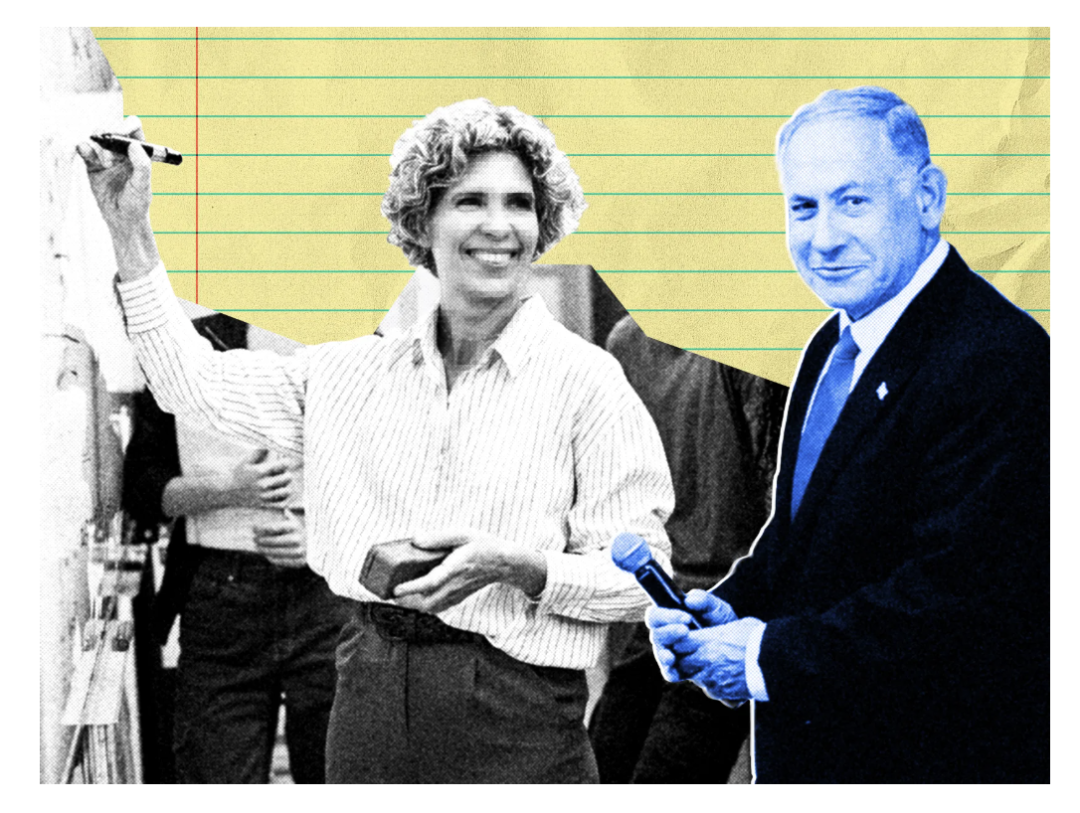 专门从事青少年身份认同研究的西北大学学者伊丽莎白·格伯观察到一个令人不安的趋势:越来越多的青少年开始将 AI 纳入自我概念形成的参照系,就像他们过去依赖家人、老师、同伴与导师那样。

十二 | 格伯将这一现象与 2010 年代初社交媒体的全面进入相比较:社交媒体在最初几年几乎没有遭遇系统性的质疑,直到许多年后,其对青少年心理健康的深远影响才逐渐进入主流视野。

十三 | 那个时候,许多损伤早已完成。
成长没有规律回到这个时代更宏观的技术语境来看,有一种弥漫已久的逻辑:将人身上最有用的部分提炼出来,使之可迁移、可复制、可被系统接续。当它悄然渗入青少年的成长过程时,它试图从一个尚未完成的人身上,提炼出某种可以稳定调用的东西。 可青春期的价值,恰恰建立在它的低效之上。一个 16 岁的青少年,可以对两件毫不相干的事物同时着迷,对未来抱持前后矛盾的幻想,可以把一个问题翻来覆去想了很久,最终发现自己依然没有想清楚。正是在摇摆之中,一个人开始辨认哪些感受真正属于自己,哪些只是外部的回声;哪些值得坚守,哪些不过是一时的假象。AI 最擅长处理有规律可循的部分,它可以归纳风格、模仿语气、检索知识框架。而青少年身上最值得被保留的,恰恰是那些尚无规律的部分。一个少年笔记本里潦草、自相矛盾的文字,并非需要被整理的素材,而是他之所以是他、而非任何其他人的凭证。写了又删的段落、久久找不到答案的漫长、对着镜子觉得陌生的下午,正是一个生命在慢慢弄清楚自己形状的过程。Character.AI 的研究中有一个值得重视的发现:在最活跃的青少年用户中,59% 在主动创造角色,而非只是消费现有的角色对话。他们在机器给予的空间里,进行着某种主动的世界构建与自我演练。

十四 | 他们有时是提问者,有时是创造者,有时甚至在用机器提供的材料进行某种内在的排演。

十五 | 哲学家福柯曾将人用以自我工作的各种实践称为自身技术,日记、反思、禁欲、写作,都是人用来认识和塑造自己的工具,没有哪一种是中立的,也没有哪一种不带有特定的认识论前提。

十六 | 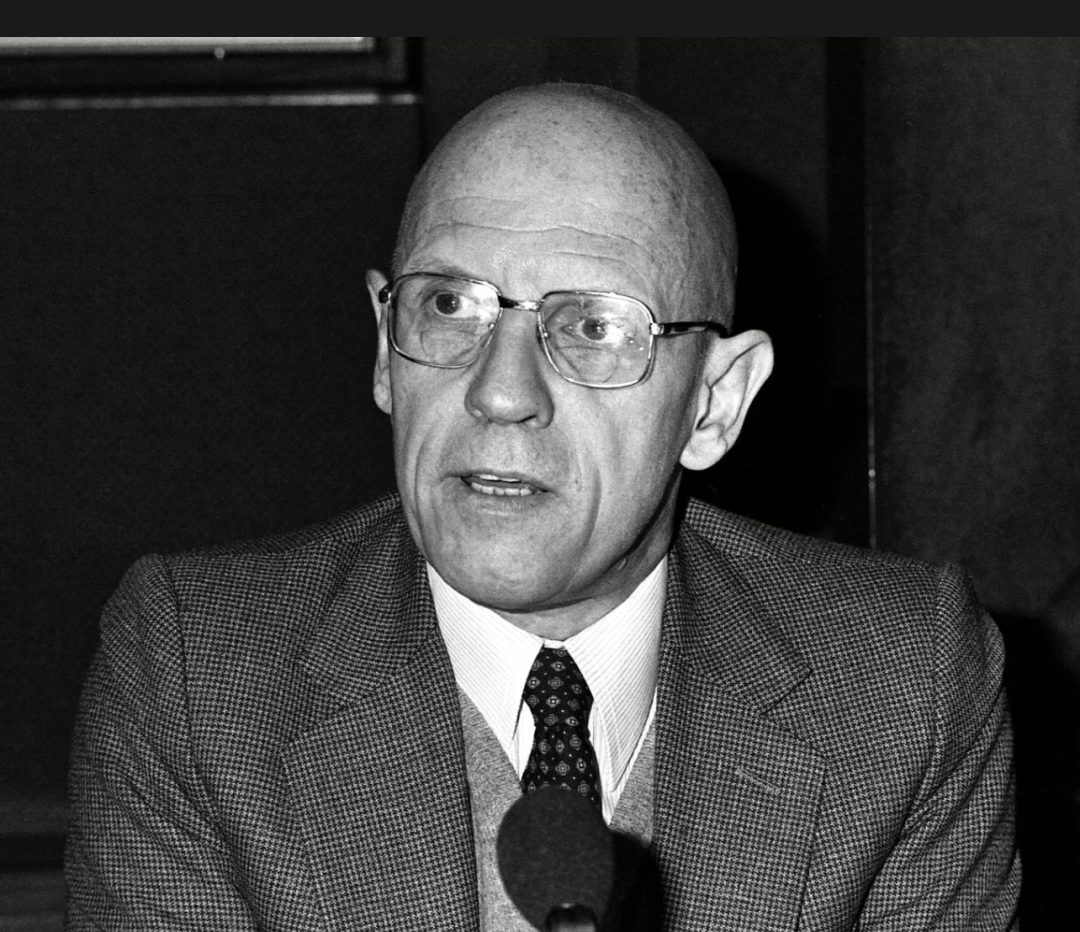
Michel Foucault今天的 AI 同样可以被纳入这个传统,作为一种新的自身技术被使用。青春期是一个人在慢慢成为自己的过程中,独自经历的那段摸索。那段摸索,没有旁观者,也无法外包,必须由这个人自己来完成,慢慢地,有时候很迟缓,有时候很痛苦,但那正是它之所以有意义的原因。至于一个把这段过程也纳入效率优化的未来究竟会通向哪里,恐怕没人敢想。
Current article:http://l3hw9.cuntoujuefourantapai.cfd/list_89eazb/nex60zs.html
Published on:22:06:53
新闻热点

新闻爆料
图片精选
点击排行


